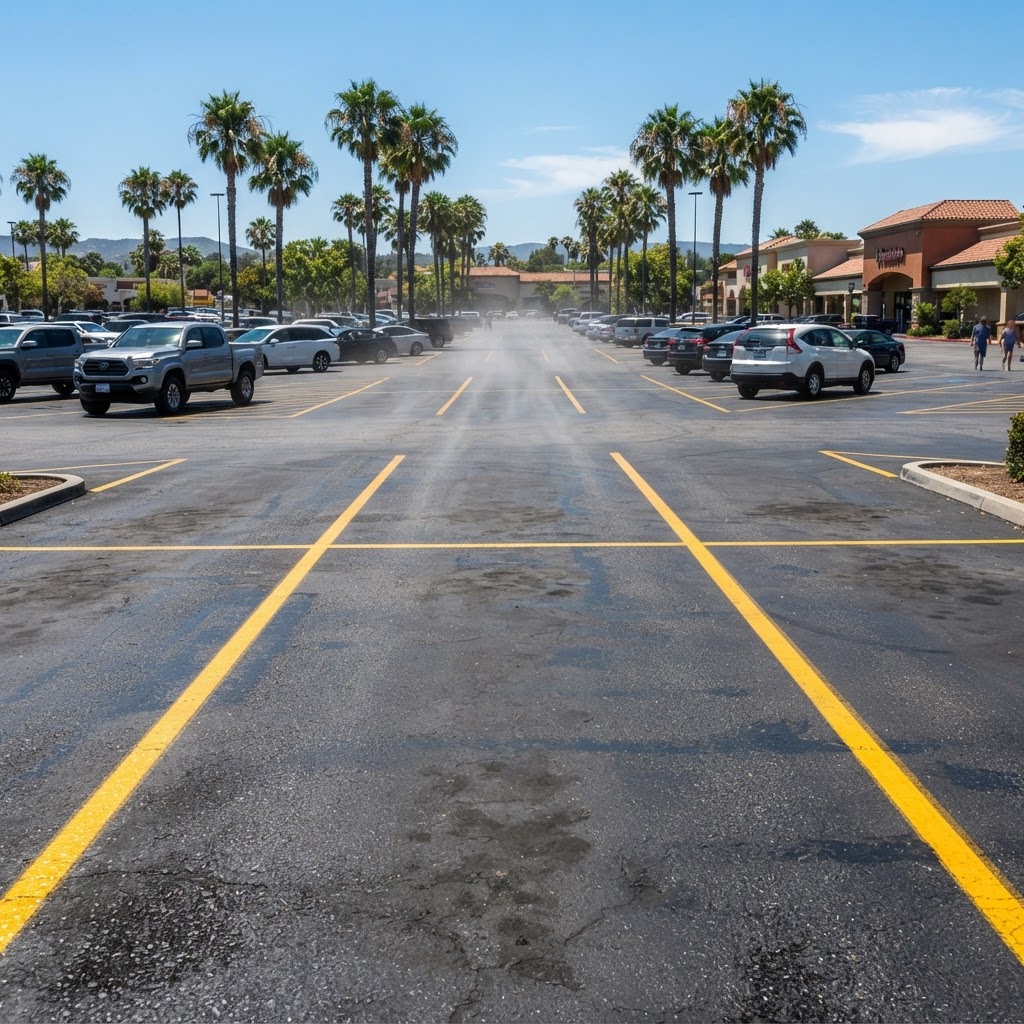
How Summer Heat Affects Asphalt
California summers push pavement temperatures above 140°F, well beyond the air temperature. This heat stresses asphalt and its markings in ways that shorten their lifespan if you don't plan for it.
Softening and Rutting
Extreme heat softens the asphalt binder. Under heavy vehicle loads, softened asphalt can rut and deform, which distorts markings and creates uneven surfaces. High-traffic lots and loading docks are most vulnerable.
Paint Failure
Conventional paint applied in peak summer can flash-dry before it bonds, leading to peeling and premature fading. By late summer, many painted lots look worn despite being striped just months earlier.
UV Degradation
Intense summer UV breaks down both the asphalt binder and paint pigments. Without a protective sealcoat, the surface oxidizes, turns gray, and becomes brittle.
What Holds Up in Summer Heat
Thermoplastic Outperforms Paint
Thermoplastic markings are the clear winner for California summers. Because they're heat-fused into the asphalt at 400°F, summer surface temperatures don't degrade them. They resist:
- Softening and tracking that ruins paint in heat
- UV fading that turns paint gray
- Tire pickup from hot, soft tires
A lot striped with thermoplastic in spring will look sharp through summer and beyond, while a painted lot may need restriping by August.
Sealcoat as Sunscreen
A fresh sealcoat in spring or early summer acts as sunscreen for your asphalt. It blocks UV, restores the black surface that reduces heat absorption, and extends pavement life by years.
Summer Maintenance Tips
- Inspect on hot afternoons. Walk your lot when pavement is hottest to spot softening, bleeding, or rutting.
- Avoid painting in peak heat. If you must restripe in summer, schedule it for early morning when pavement is coolest.
- Watch for oil spots. Hot weather makes vehicle fluids more likely to drip and stain; clean them promptly to protect the asphalt.
- Monitor high-traffic areas. Entrance lanes and drive-thrus wear fastest in heat; plan to refresh them first.
- Plan fall thermoplastic. If your painted lines are failing, schedule a thermoplastic upgrade for fall when conditions are ideal.
The Long-Term View
Summer heat is inevitable, but its damage is preventable. The property managers who spend the least on lot maintenance over time are those who:
- Sealcoat every 2-3 years to protect against UV
- Use thermoplastic instead of paint on high-traffic routes
- Address heat damage early before small issues compound
Is summer heat wearing down your markings? Highline Striping Inc. installs heat-resistant thermoplastic striping and sealcoating statewide. Get a free estimate.

